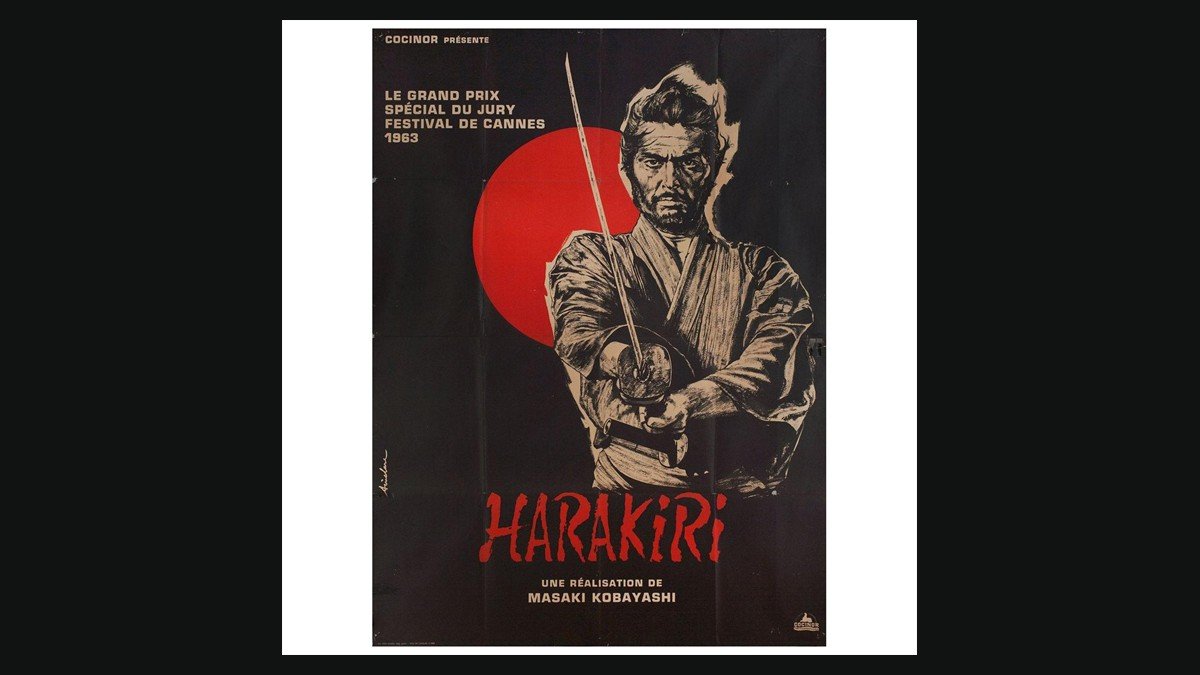
In my effort to watch old Japanese films, today I discovered a masterpiece by Masaki Kobayashi , Harakiri. The Japanese way of making films is an example in restraint and harmony. The representation of the emotions is intense and there is undeniably a remarkable classicism at work. Unity of action and unity of thought reign in this film. It is about the Honour of a Samurai and what a facade it has turned out to be.
A samurai approaches a house of Edo , requesting their permission to commit harakiri in their forecourt. As he is granted his wish, he narrates to the audience the tale of his life and how a few months ago his son in law had come to the same house with a similar wish but was treated in a most ruthless and inhuman manner.
He tells them ,who can fathom the bottom of a man’s heart and how his son in law’s wish for a respite of one or two days before fulfilling his death rite was negatived rather hastily in the name of Samurai honour.
The screen-play and cinematography are brilliant and sustain the grave and sombre mood of the film. As he reveals to them how he has humiliated the swordsmen of the Edo who were the abettors of Motome, his in law’s death in a sword confrontation and cut their top knots, a symbol of samurai honour, the clan choose to silence him. The Samurai goes down taking twelve warriors with him in the final battle. The head of the clan chooses to cover up ordering that the Samurai indeed committed harakiri , that his warriors died of illness and also orders the humiliated warriors to commit harakiri.
The film is an exploration into the false honour and the facade of valour that marks the life of a Samurai. It recreates the dark and turbulent times of medieval Japan. With excellent portrayal and minimum music the film relies mostly on the play of expression, light and shadow, dialogue and mood. An excellent film for all movie lovers and especially for Lovers of Japanese cinema.