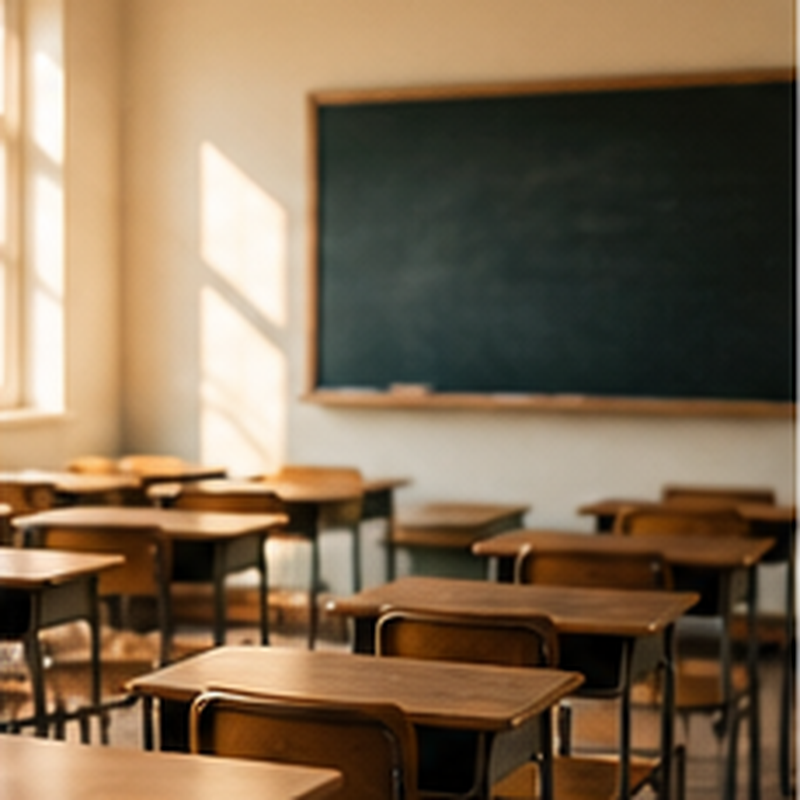
What other place for a teacher than a classroom; A room with a class of students willing to learn from their teacher. All other sources or gadgets of learning like learning platforms, digital classrooms, Tabs, Apps, Guides can never replace the teacher. A Teacher who ‘Knows’ the subject, ‘Knows’ the students and ‘Knows’ to submerge the individual identity in the collective wisdom of the class, reigns supreme.
For a good class to happen (Not in the Physical sense) the teacher should have a clear plan in place as to the objectives of the session, learning content to be transferred, creative thinking to be encouraged and the smaller milestones that need to be crossed to achieve the higher outcomes. The first few minutes have to be spent in recapitulation or leading the way or to put it in a more metaphorical manner; Warming up. When this part is completed the teacher should introduce the main theme, idea of the session. The importance of questioning in all this cannot be over emphasized. On a lesson about ‘Globalization’ I showed my students a picture of a flattened globe. As technology and economy drive the interdependence of Nations, has the world become really flat was the question I posed them. I got many answers and I’m sure the novelty of the idea may have made them look at the topic from a different perspective. Making use of a black/green board or a digital board which cuts down the teacher’s work, adds a more academic atmosphere to the class.
A teacher has to be alert at all times. To that end, he/she has to interrupt the proceedings to elicit responses from the class which again should not be in a group. This encourages participation and involvement from individual learners. Factual/Wh questions can be minimized if the teacher senses that the class has really latched on to the subject and is ready for a dive. The information oriented questions must be replaced by more creative/higher order thinking questions like; Do you support Globalization?, Can Globalization bridge the rich –poor divide? And so on.
A teacher who allows the students to speak and voice their thoughts is more likely to succeed in attaining the larger outcomes than a Bore that blurts or reads out something and exits. One of the words Teachers use frequently and which needs to be used sparingly except when an exam is in progress is ‘Silence, Stop Talking.’ I remember one session I was asked to arrange to be filmed by the UGC, in which the students had to debate in 2 groups about ‘Should we have Uniform in schools or No?’ The debate lasted over one hour and as mediator or referee I only paid attention to ensure that everybody present contributed something to the topic.
Part of the problem with teachers is the imposition of their identity/personality/presence on the class. The urge to show-off your learning (Yours truly included in my first months in the profession) undermines the child’s curiosity. The ‘Undemocratic’ imposition of an identity because of experience, age, or cadre represses the budding thoughts of the children.
Many teachers I have come across in my career were an exception to this precept. The Geography teacher at my school became a part of the group, joked, played and ate with them. He was known for his field activities. On one of his late night ’Star watch’ sessions organized for the 6th standard, which I attended out of curiosity, I came to recognize the Constellations: Orion, Ursa Minor, Ursa Major, Saptarishi etc. In the morning we went bird watching and I could spot and learn the names of birds like: Drongo, Teal, Wood pecker, Flamingo etc. If this is what I could go through, imagine the excitement and thrill of the students. The Natural Science teacher was a total child. Children from the 1st standard to the 10th standard spoke to him and he was always ready to give them a patient hearing. Empathy and compassion are essential for a teacher. Children depend on their teachers for many things. In our class 8th excursion we had to cross the Narmada River on a country boat to reach the site of the Sardar Sarovar dam. As the boat tilted and turned in the deep waters, two of my students screamed, “Sir, we don’t know swimming! You must save us if anything happens.” I answered them that I was there for them. All this was done in a semi-serious manner for I am a novice so far as swimming is concerned, even to this day.
Imagination is the best resource a teacher can muster. Activities which are crucial for an interactive classroom can be arranged with a little imagination. When I joined my PGDES course at EFLU after my Post graduation, there was an activity in the first ELT class. Each of us was randomly paired with another person and we had to introduce the other to the class. This gave rise to a lot of fun and worked as an excellent ice breaking session. Botany teachers describing the parts of a plant from the text book can as well bring a plant into the classroom to give a live demonstration.
Contextualizing learning helps the child to remember better. I cannot but admire our Linguistics Professor who literally jumped around in the class to demonstrate the particle shift in a phrasal verb in one of his Linguistics classes.
He took on the thug
He took the thug on.
Lending a context to an idea or an answer is possible through group discussions and seminars in the classroom. Field trips are also an excellent mechanism to concretize learning. A field trip to the Railway station for example will enable the child to know more about trains, their routes and destinations. The freight and parcel sections will help them know about the arrival of goods and the local trade/ commercial practices.
Finally the class can end with summarizing the proceedings which can be elicited from the students themselves followed by a home–task. An intelligent teacher conserves the students’ time and energy. A poor teacher apart from spending time aimlessly is also seriously denting the child’s prospects by adding more time to their student days for they have to spend more hours knowing all that they could not in their class. A classroom is where it all happens. Disapproval or appreciation from a teacher whom the children value matters a lot. Hence we as teachers should be aware of this monumental role.
” Education is not preparation for Life, Education is Life itself” John Dewey.