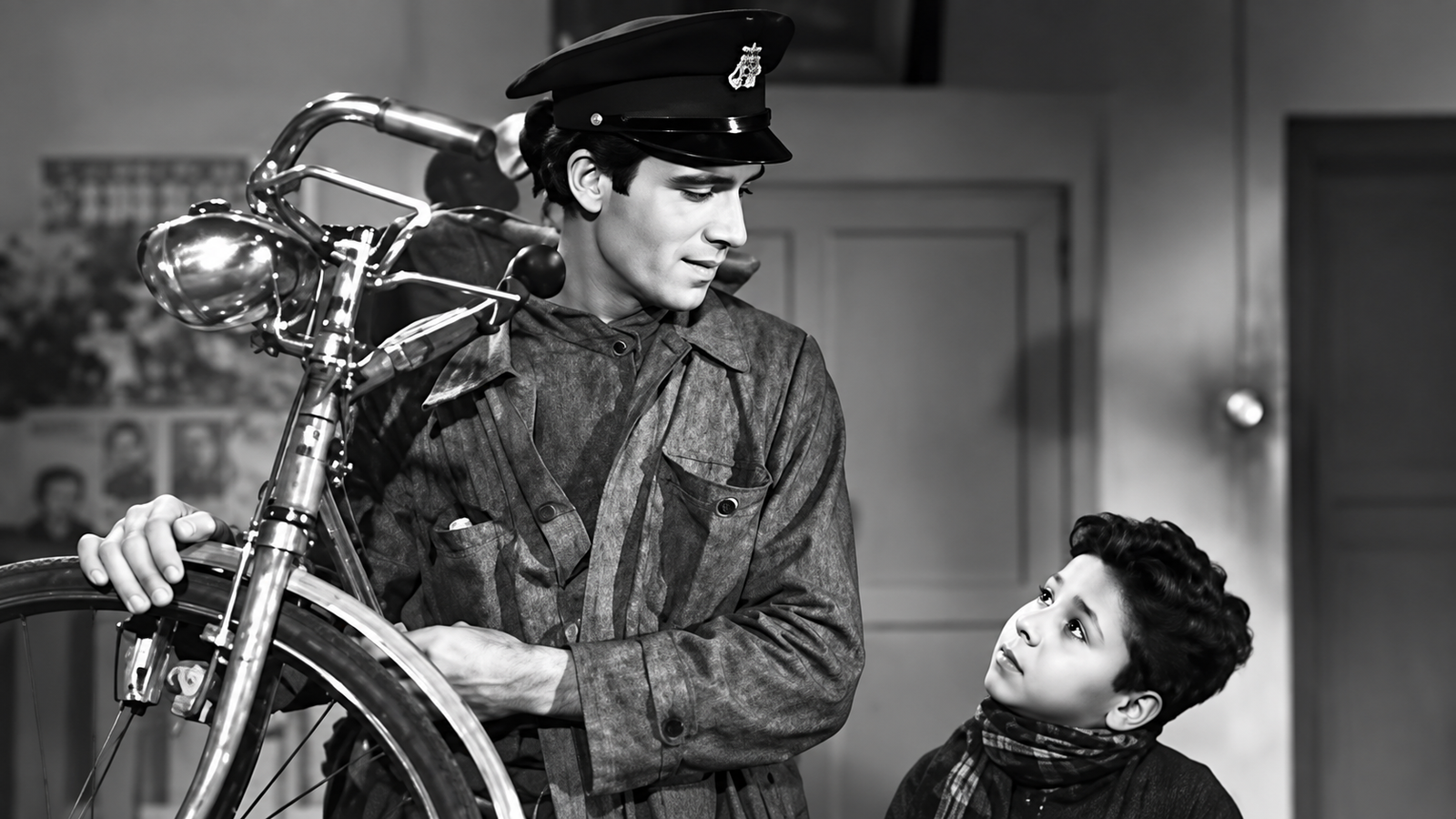
Had watched his film Bicycle Thieves some time earlier and have never forgotten it. ‘Bicycle thieves’ is a film everyone has to watch at-least once. (Satyajit Ray watched it in London and decided he was going to make films) From where does the film get its appeal? What is it about this film that makes moviegoers and connoisseurs alike, praise and appreciate it? For me, it is not because the film has some great incidents, memorable characters or portrayal but because it is simply a slice of life. Life documented from a lens could not be more real than Bicycle thieves. The film touches a number of things; the anxiety of poverty, the character of a mob, the relation between a father and his son, the indecisiveness of truth and so on. But the Director doesn’t make his film look for answers. He leaves the story for what it is. It is a leaf out of a large volume called life. In the final scene of the film, Antonio and Bruno, the father and the son, walk away from the camera. Each of them is occupied with a different emotion; the father about their stolen livelihood and the son about sticking to his father. As the camera recedes into the background, filming the city tram and the milling crowds pouring out of the football stadium, the father and the son remain in the frame. De Sica’s film captures the uncertainty of life, the problem of an unorganized existence and the coldness of destiny.
Italian neorealist cinema had redefined the treatment of the subject starting with the film ‘Rome-Open city.’ The Directors preferred ordinary people as actors and not stars. The sets are natural settings and the dialogue or expression is not contrived or manufactured. De Sica treats his films with a potent element; truth. His film ‘Shoe Shine’ is another example of his engagement with unprofessional actors. Giuseppe and Pasquale , two shoe shine boys living on the fringe of society in direness and poverty have plans to buy a horse and save up money for that. When they fall short, they undertake a petty crime of selling stolen goods to earn some quick bucks. Law enforcers catch up with them. The two childhood mates who are the thickest of friends, start drifting away from each other when they get involved in this petty crime and vouch not to reveal the names of the real perpetrators.
Inside the Juvenile prison they are separated and imprisoned in different cells. The Police enact a scene to convince Pasquale that Giuseppe is being tortured and force him to confess the names of the gang members, one of whom is Giuseppe’s brother. Circumstances and abettors create more differences between the two and as they get hateful of each other, their friendship is broken for ever. In the juvenile court Giuseppe the smaller kid who has a family gets 1 year and Pasquale the older one who is homeless gets 2 years. When Giuseppe escapes from the prison with another convict Archangel, Pasquale tells the Police that he knows the place where they could have gone and leads them to the stables. The horse has been released by Giuseppe and Pasquale goes in search of the two escaped convicts.
He spots Giuseppe and Archangel riding on the horse. Archangel runs away and Pasquale starts thrashing Giuseppe with his belt; venting out all the pent-up fury and hatred. On the bridge above the stream Giuseppe falters and crashes to his death. The film ends with the Police running into the scene and Pasquale in tears about what he has done. De Sica’s, treatment of the theme as in Bicycle thieves is dispassionate and unadorned. It is a representation of the rawness of life, the concatenation of events that have no real cause, but emanate from the reality of life.