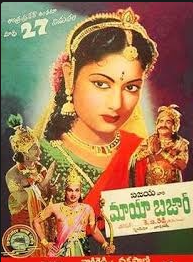
The movie Maya Bazaar from Vijaya Studios has been voted one of the top ten Indian movies of the twentieth century. Following in the footsteps of my Dad, who watched it 53 times—only in theatres, TV shows excluded—I have watched it at least 25 times so far, mostly on TV. When the colour version was released in 2010, I watched it in a theatre. Indeed, the film has many firsts to its credit. It is centred around the animosity between the Kauravas and the Pandavas without the Pandavas appearing in even one frame.
Perhaps it can be called the first multi-starrer film in Telugu, with all the big stars of the day in it: NTR, ANR, SVR, Savitri, Gummadi, CSR, Relangi, Vangara, Allu, Suryakantam, Chayadevi, Ramana Reddy, RNR, Mukkamala, Mikkilineni, Rushyendramani and others. The photography of Marcus Bartley is talked about even today. The scenes in which Ghatotkacha lands in Dwaraka, lifts Sasirekha and flies away are regarded as photographic feats much too advanced for those days.
Another outstanding feature of the film is its dialogue, which has remained popular even to this day. Some phrases such as Asmadeeyulu, Jiya, Tasmadeeyulu, Dushta Chathustayam, Gilpam, Gimbali and Takshana Kartavyam have joined the stock of Telugu vocabulary. Exploiting the characteristics with which each mythological personality is endowed, the writer and director are able to generate humour from the screenplay. Dusshashana, for example, has his catchphrases, “Bhale Karna Bhale” and “Takshana Kartavyam.” Lakshmana Kumara has only one motto—that of overtaking Abhimanyu at every turn. Revathi, the mother of Sasirekha, is taken in by wealth and worldly riches. Balarama is headstrong and can be won over with flattery and ostentation. The music rendered by Ghantasala was top-notch and has not lost its beauty even today. Favourites such as Vivaha Bhojanambu, Sundari Neevanti Divya Swaroopam, Lahiri Lahiri Lahirilo and Aha Naa Pellanta can set the mood and bring smiles to tired faces. Nothing needs to be said about the actors, who seem to fit perfectly into the roles given to them. Savitri and SVR stand out, their performances enlivening the main theme of character mismatch and the trope of person-swapping.
Finally, coming to the title itself—Maya Bazaar, or the Market of Illusion—what we see is the representation of magic at different levels. As Lord Krishna says in the film:
చిన చేపను పేద చేప
చిన మాయను పెను మాయ
Lambu and Jambu can play some minor tricks. Chinnamayya, the guru of the Ghatotkacha clan, is a seasoned magician. Shakuni can create magic with his dice; Ghatotkacha has immense powers of magic and sorcery. But Lord Krishna can subsume all this in his universe of illusion.
Themes from the film have been played out repeatedly in several movies: misplaced brides, masquerades, resistance from parents to lovers, separation of lovers, brawn versus brain power, and finally the theme of illusion itself. The film appropriates the setting and milieu of the Mahabharata for the Telugu screen and audience. Phrases such as Gongura Andhrasakam and Sakambaridevi prasadam have become part of cuisine and banquet lore. And did we ever imagine Ghatotkacha eating Pulihora, Dappalam, Beni, Appadam and other delicacies, drooling over food? The movie has remained fresh and will continue to be so for time to come. Director Sri K. V. Reddy has etched his name alongside Telugu poets and litterateurs with this modern comic-mythological masterpiece.