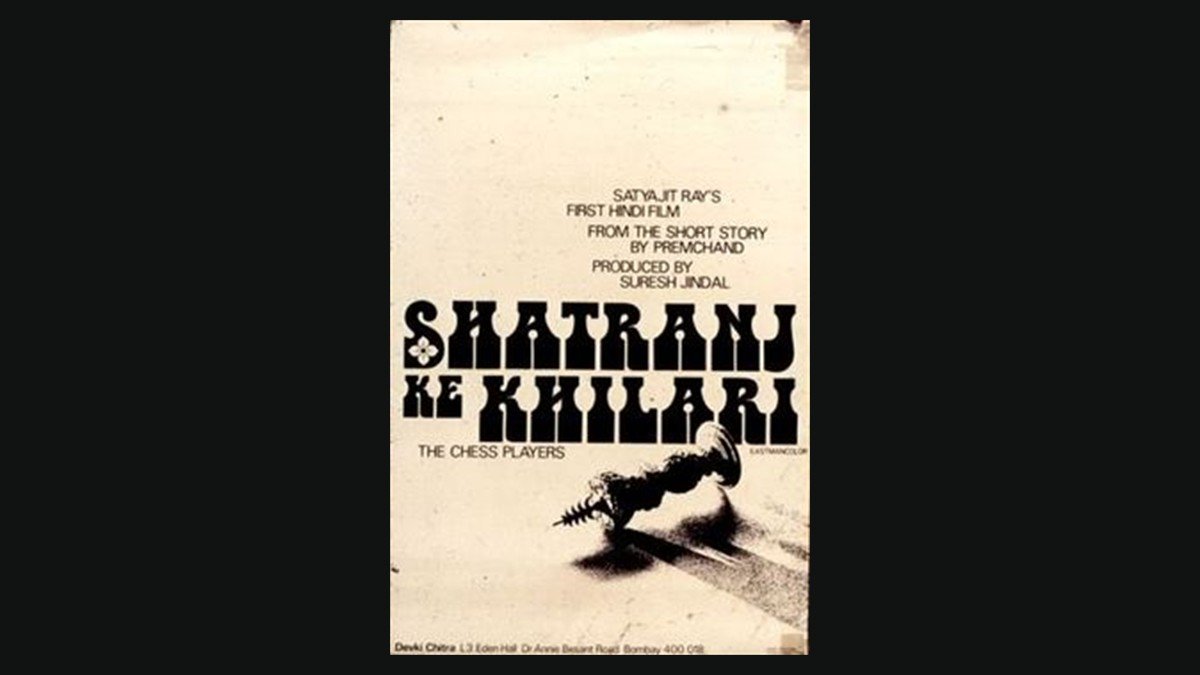
Akira Kurosawa says, “ Not to have seen the cinema of Ray means existing in the world without seeing the sun or the moon.” This is a film from the master; screenplay, direction and music by Satyajit Ray.
The year is 1854. Avadh is ruled by Nawab Wajid ud Daullah who reigns from a world submerged in dance, poetry, music and other forms of entertainment. Alleging misrule, the East India Company is plotting to annex Oudh, providing an allowance for the Sultan. The Nawab can only make feeble protests. He is really helpless, having played into the hands of the company long ago, disbanding his troops and paying them (company) a ransom.
Blissfully unperturbed by what is happening to the fortunes of the kingdom or the king are two friends Mirza Sahib and Amir Sahib who are eternally engaged in the bloodless battle of the chess board. Their preoccupation is so great that Mirza Sahib is totally oblivious of the presence of his wife and opaque to her needs. Amir Sahib is so gullible that his wife is carrying on an affair behind him with her cousin.
The king is a bundle of contradictions. He prays 5 times a day, does not drink, but has 400 concubines and 13 wives. The film makes fantastic use of shade and light. I liked those scenes where the morning sky of Lucknow is shown silhouetted against the bright red morning Sun, the tombs and minarets glistening in the semi brightness. Then there is the scene in which the errand boy watches the Company troops riding towards the province for the impending fight. A moment in history is very poignantly evoked without any elaborate drama or action. The fluidity of the passage of scenes and Amitabh Bachchan’s loving narration of events as they happen (voice over)add a vintage or classic touch.
The crux question is the obsessive fascination of the two gentlemen towards chess. The final show down reveals the character of these two protagonists. There is nothing in their lives that both of them agree upon, apart from chess.
It is the force that binds them. That is why they are Shatranj ke Khilari.