Japanese films of the first half and early second half of the 20th century are an example of beauty and grandeur. They are also crafted with simplicity and imbued with mysticism. The aura of the films as such arises mostly from the theme and the treatment of the subject. The rigor of the filmmakers draws strict lines and the viewer is never traumatized or forced to sympathize with the characters. It is a representation or a sketch where the artist does not indulge his fancy but adheres faithfully to the scene and the immense possibilities that the untold can voice.
Yasujiro Ozu, Kenzo Mizoguchi and Akira Kurosawa certainly deal at length with the themes of simplicity, mystique, horror, and cruelty in their films. Akira Kurosawa in particular has been an influence on several film makers. His films, Seven Samurai, Ran, Yojimbo, Kagemusha, Rashomon, The Throne of Blood, The Hidden Fortress are wonderful to watch and have been all time classics. But my personal favorite among his films is Dersu Ouzala. If some one asks me to recommend a film by Kurosawa, I would unhesitatingly suggest Dersu Ouzala. Why the film means so much to me and what makes this film a classic is the subject of this post. Films are made for entertainment. Some films are made to make a statement. There are films which are not either, but contain a Universal element. Such films no longer remain artistic pieces but transcend the limits of art. They are capable of realizing the Ultimate, the Truth that John Keats mentions in his Odes, “Beauty is Truth and Truth Beauty”
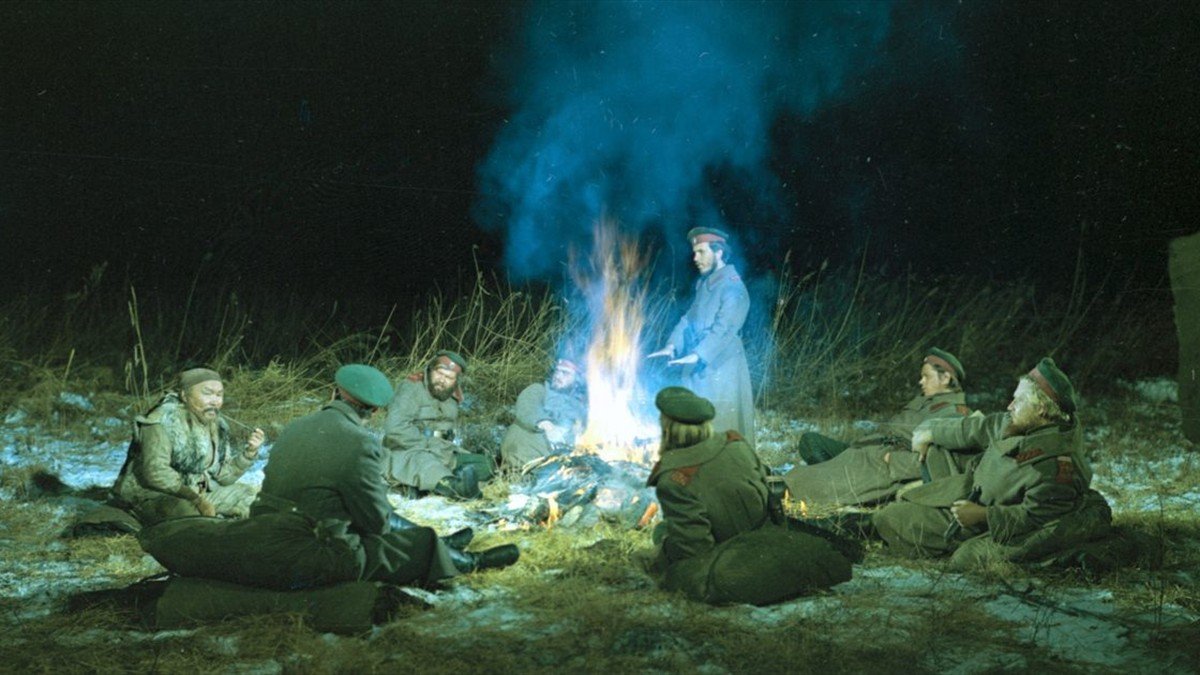
Dersu Ouzala is a production of Mos films. The principal protagonist Dersu is a nomadic hunter roaming the forests around Upper Mongolia or the Ussuri region. His philosophy in life is simple; Respect for the elements, Sun, Fire, Water, Wind and respect for the animals with whom he is co-inhabiting the forest. He is an expert shooter and doesn’t miss. Nevertheless he does not hunt for pleasure and lives in the forest deeply aware of the harmonious balance that Nature has ordained to be maintained. During his expeditions he meets Captain Arseneyev and his team who have been sent to survey the forests in that region. The friendship between the two and how with his knowledge of the forest and the terrain, Dersu saves the life of the Captain and also helps them explore the landscape forms a major part of the film. With no family of his own ( Death of his children due to small pox) Dersu joins the team of the captain and leads them across the valleys, forests and grasslands of the region. Dersu worships the Tiger as the totemic symbol of strength, power and majesty. He shoots accidentally at a Tiger and regrets his decision immediately. The nagging doubt leads to nightmares and he sees a decline in his abilities. After the survey is over, the Captain offers to take Dersu to his home and reluctantly Dersu agrees to go with the Captain. For one who has been in unison with the rhythms of Nature and the forest, Dersu finds the ways of the town a little too irk some; the purchase of firewood, the long hours spent inside the house, the crafty ways of the townsmen etc are not to his liking. Although he has a friendship with the little Captain, Dersu yearns for the free spirited life of the forest and is suffocated by the cloistered existence of a city dweller. Sensing the mood of Dersu, the Captain permits him to return to the forest making him a present of a new automatic gun.
The film begins with a telegram summoning the Captain to identify a corpse on which his address has been found. Bewildered and bereaved, the Captain identifies Dersu, his dear friend who has been killed and robbed of his Gun. The tragedy that the Captain has unknowingly inflicted on Dersu adds another poignant touch to the film. The irreverence and cruelty of the inquest as the Police satirize and scorn the memory of Dersu as the Captain looks on and the massive logging of trees that has left the forest denuded hint that times have changed.
For me Dersu Ouzala is a cathartic, palliative memory. The layered portrayal that Kurosawa achieves in the film, where human identity is established as next to nothing before the might of Nature has not been captured as subtly or as beautifully in any other film. The unalloyed and untainted friendship between the Captain and Dersu is a pure emotion brought out in the film. Dersu Ouzala reminds me of the Russian masters; Chekhov, Gogol, Turgenev and Pushkin whose works certainly underplay the presence of emotion or drama only to capture the Ultimate.